# Stripe vs PayPal vs Paddle for High-Risk Projects (2026)
Table of Contents
So I tried a bunch of payment providers for different projects. Picking the right one is basically the difference between your project living for a year or dying in a week. I’ve had PayPal and Stripe both ban me while trying to set up website payments. This is the guide I wish I had before I actually went paid and started taking money from strangers.
The PayPal Trap
PayPal is the classic pick. Everyone has it, so it’s usually the first thing people think of. But it is very risky and I wouldn’t recommend it if you can avoid it. If you want to see who actually uses it, look at some of the biggest high-risk services like Aimware. They’ve been around for years and have a setup most new guys can’t replicate. For a new dev, it is often a trap.
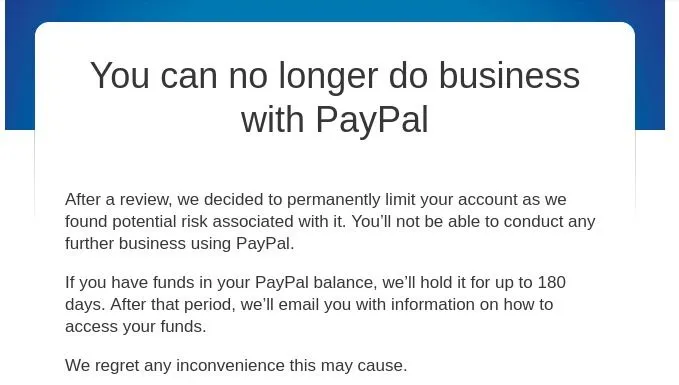
If you go for the direct, no-middleman approach, you handle everything on your own site using their API. You will need a PayPal Business account for this. I used this approach for a few years and it worked until it didn’t. I eventually got banned for life. It was a name ban, meaning they banned every account I had and told me I could never make a new one. Even if you have a mature audience that doesn’t cause trouble, it is just a matter of time. If you provide your real details, which you kind of have to, they will investigate your site sooner or later.
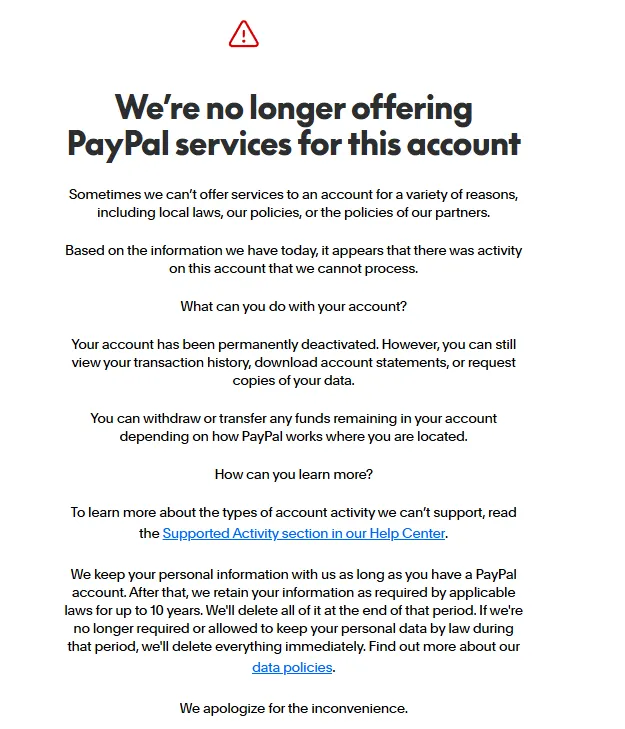 The final notice from PayPal. “Permanently deactivated” basically means they’ve nuked your identity across their entire system.
This is why it is so important to avoid using words like hack, cheat, or bot on your homepage. If an investigator sees those, you’re done. You need a business account if you want to automate your setup and have those clean hosted checkouts, and it also helps hide your real name or home address from buyers. Just make sure you double check your configuration so you don’t accidentally dox yourself to some random buyer.
I lost one account early on because I provided fake info. PayPal likes to check IDs from time to time, so if you lie, you’ll lose the account and whatever money is inside.
The biggest pain with direct PayPal is the refunds. Users love them because it is so easy. They don’t even care, they just press a button and now you have a headache. You have to fight each one, explain yourself, and sometimes it gets escalated to PayPal staff who then look at your site. It is a massive waste of time. What’s even crazier is that buyers can ask for a refund up to 30 days later. You are in a terrible position if your audience is immature or full of skids. They will make your life miserable with those disputes. PayPal also tracks your dispute rate. If you go over 1.5% with more than 100 transactions, they start hitting you with high-volume fees. It is just a mess.
There is another way that’s probably simpler, which is using wrappers. Sites like antistock.io, shoppy.gg, or selly.io handle the hard part of the code and the automation for you. They usually charge a fee or a subscription, but the quality of life is better. You get a storefront, you add your keys, link your PayPal, and you’re done.
The real life hack here is that some of these services handle payments via Friends and Family (F&F). Since F&F is meant for personal transfers, users generally can’t reverse or refund them through PayPal. This is huge because chargebacks are the number one reason PayPal starts investigating what you’re actually selling. If you can avoid refunds, you stay under the radar longer. I didn’t use these wrappers much myself, but they seem like a better bet than a raw business account if you’re just starting out. It saves you a lot of the initial headaches.
Stripe: The Industry Standard (Until You Get Banned)
Stripe is the most popular pick nowadays. It is easily the most dev-friendly option out there for website integration. Every SaaS project, vibe coder, and random service seems to go for Stripe as their first pick. It is basically the industry standard. If a friend of yours wants to make money online, they probably mention Stripe.
But you have to be very careful with it. It is a solid pick, but it’s risky if your audience is full of immature kids. I used Stripe for quite some time and it worked well until I got shut down for “high risk.” Plenty of big high-risk projects use it, Onetap is a famous example in the cheat scene, but you’ll see it used for all sorts of grey-market tools. It is the same service you probably used to pay for your ChatGPT subscription.
Stripe is weird. They are pretty chill when your business is fresh. You can open an account, fill in your details, provide your ID, and you’re ready to go. They won’t check you much until you actually start making some money. But they are incredibly sensitive when it comes to refunds and chargebacks. It is not as easy to chargeback as PayPal, but it’s not hard either. Users just contact their bank and tell them some bullshit about not authorizing the transaction.
I had a good experience at first, but once the money started coming in, I got shut down. Their classic “high risk” response is so annoying because they never tell you the exact reason. I have no idea how the giant high-risk providers keep Stripe running long-term. It is a gamble, especially if your website uses words like hack, cheat, or bot. You want to avoid those words on your homepage at all costs. You need to present your site as a legit business, not a grey area project. You have to figure out a narrative that makes you look like a normal software company.
Another thing that kills your account is location. Stripe blocks Russian cards because of sanctions. If you have a Russian userbase, you are asking for trouble. You should block Russians from even trying to use your Stripe, because too many failed payment attempts will get you flagged. Stripe wants to see a clean state: very low refund rates and very low payment failure rates. If your stats are worse than a “normal” business, you’ll be classified as high risk and shut down.
I liked Stripe, but after one of my businesses got banned, I gave up on that account. Later I tried again with a different project. We had a very immature audience, lots of trolls and Russians. We made great money in the first month, but we didn’t even survive those thirty days. Stripe is easily the most annoying provider to fight with because they would randomly stop my payouts and demand more info about the business every other week. Once they finally flagged the project as high risk, they didn’t even let us keep the money from that month. They just refunded every single transaction back to the customers and left us with zero.
The most insane thing they did was the “double-tap.” I had one project where the balance actually went negative because of a wave of disputes. Stripe sent me an email saying they were going to debit my bank account for nearly a hundred euros just to “make the account whole” and ensure I could keep processing refunds.
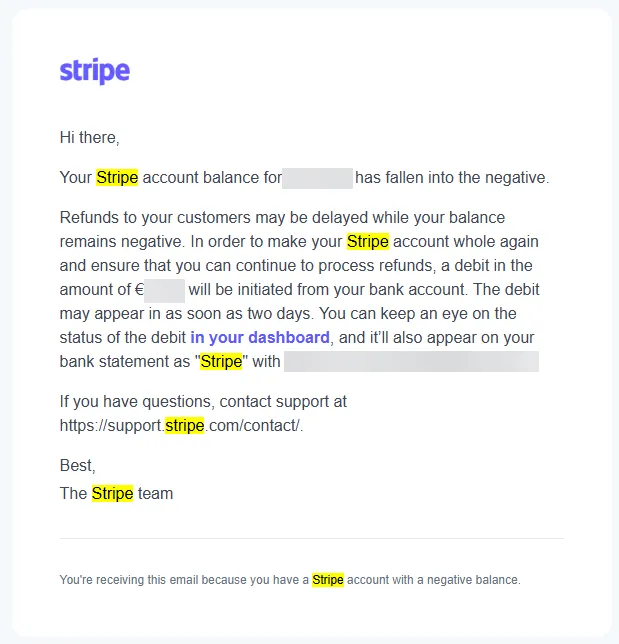 Stripe informing me they’re pulling money from my bank account to cover a negative balance.
I figured paying it would keep the account in good standing. They pulled the money from my bank, and then literally the next day, they sent the kill-shot email. They claimed the payments “didn’t appear to have been authorized” by customers and started auto-refunding every single card payment they could.
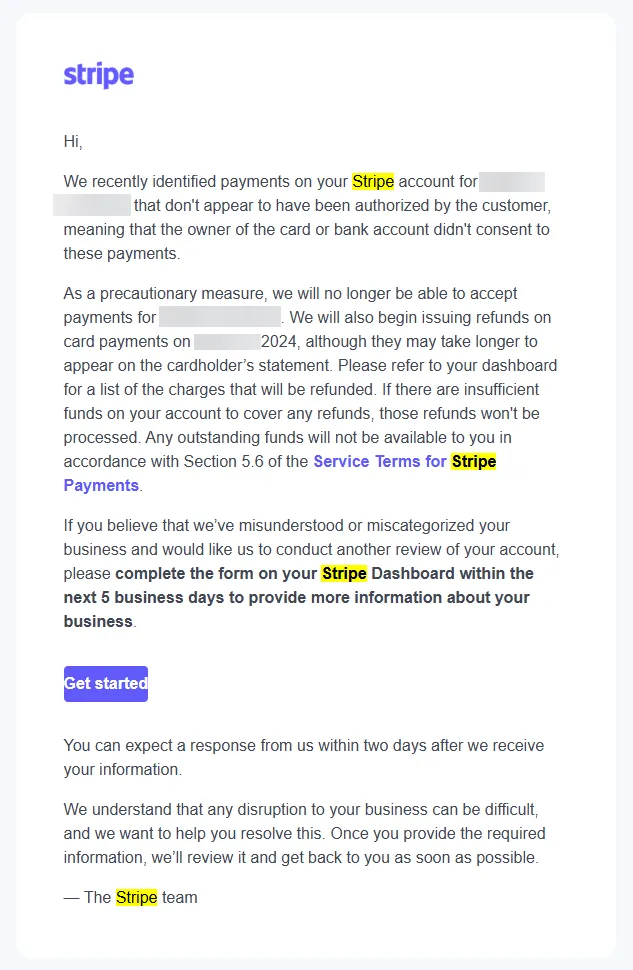 Stripe’s “precautionary” move. They refunded everything they could and left the account dead right after taking money from my bank.
Support was useless. All you get are canned responses from different people repeating the same lines. The only time they ever replied with anything real was when they wanted documents or when they were about to kill the account. After that, silence. Once they decide your business is high risk, you are cooked. It doesn’t matter how much money you made them or how carefully you try to explain yourself.
I’ve seen some guys keep Stripe alive for a while by staying under the radar, using wrappers, or keeping their audience very clean. But if you’re dealing with a chaotic userbase, lots of card failures, or chargeback-happy kids, Stripe is a ticking bomb. I’ve even heard they might put you on the MATCH list (Mastercard Member Alert to Control High-risk merchants), which is basically an industry-wide blacklist. I’m not 100% sure if they actually do that, but once you’re on it, you can basically forget about using any traditional processor again.
There are some weird workarounds though. You can use wrappers like antistock.io, shoppy.gg, or selly.io. I haven’t tested this specific combination much, and it’s usually hit or miss. I tried linking a fresh Stripe account to ko-fi.com once and got insta-banned, but my GitHub Sponsors integration still works fine. It is just that GitHub Sponsors is for donations, not for automating your product delivery.
If you go for a direct integration, don’t write it all from scratch. Use a package like Laravel Cashier or whatever library fits your framework. It makes the integration more robust. You should also use their hosted checkout if possible. It is what big companies like OpenAI use. It offloads the hard part to Stripe so you don’t have to build the UI yourself. You’ll still need to write a webhook handler to receive notifications when a payment succeeds so you can trigger your own logic.
Using wrappers for Stripe might actually be better than direct integration because they have advanced anti-fraud detectors. They can detect VPNs, bots, and low-reputation IPs. This helps keep your Stripe account “clean” and protects you from being classified as high risk. My friends have used this approach and it seems to work well enough. If you aren’t a pro at filtering out bad users, a wrapper might save your account.
Lemon Squeezy and the Merchant of Record Play
Lemon Squeezy is designed to be the easy alternative to complex processors because they act as a Merchant of Record (MoR). This means they technically act as the seller on your behalf. They support over 20 payment methods and handle a lot of the tax and compliance stuff that usually makes people want to quit.
The catch is that Lemon Squeezy was recently acquired by Stripe. Since my identity is blacklisted on Stripe, I couldn’t even get past the first step. I tried to provide my ID for the “Verify your identity” step, but nothing happened. It just went into an endless verification loop and I never heard back from them, so I didn’t even bother with it after that.
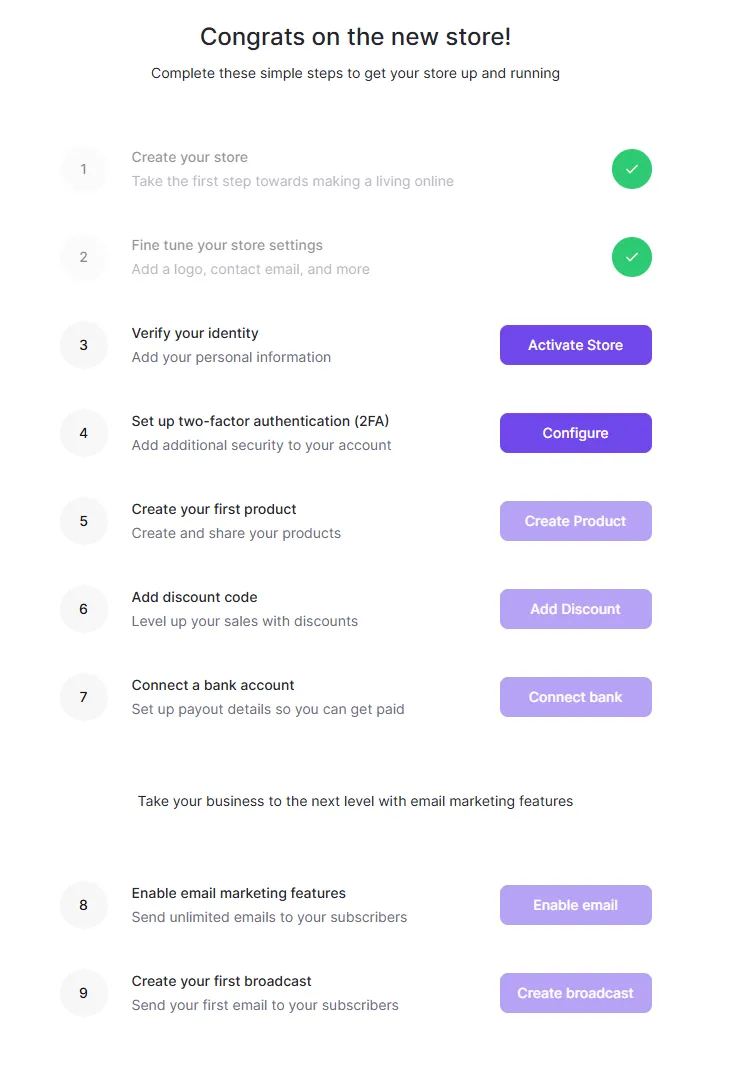 The Lemon Squeezy setup list. I got stuck on step 3 forever-probably because Stripe’s shadow-ban was already following my identity.
If you aren’t banned by Stripe yet, it might be a solid pick for you. They let you accept payments in over 135 countries and offer payouts to 279 countries and territories. You can get paid via bank transfer or PayPal.
Merchant of Record services are generally better because they handle the chargeback and refund bullshit for you. They have a bigger footprint and more power to fight disputes than you do as a solo dev. It is worth trying a MoR first because they often have better anti-fraud protection which keeps you from getting tagged as high risk.
Why Paddle is the Current King
Paddle is easily my favorite. It is another Merchant of Record specifically designed for SaaS and digital products. I think MoRs are the best way to go because they handle the annoying parts of the business. They act as a gateway to dozens of other payment providers.
Here is a nice life hack: if you are perma-banned on PayPal like me, you can still let your users pay with PayPal through Paddle. Since Paddle is the official seller, it doesn’t matter that your personal PayPal account is cooked. Paddle just gives you a payout at the end of the month. They support over 30 payment methods and 29 currencies across 200 countries.
The downside to any MoR is that you have to verify yourself upfront. This isn’t like Stripe where you can just start selling and hope for the best. They will ask you serious anti-fraud questions during the setup. They explicitly ask if you have ever been listed on the MATCH list (Mastercard Member Alert to Control High-risk merchants). The crazy thing is, most people don’t even know if they are on it, and Paddle even admits that in their form. They also want to know if any other provider has ever terminated or suspended your accounts for “unlawful activities” or “unfair acts” in the last 10 years.
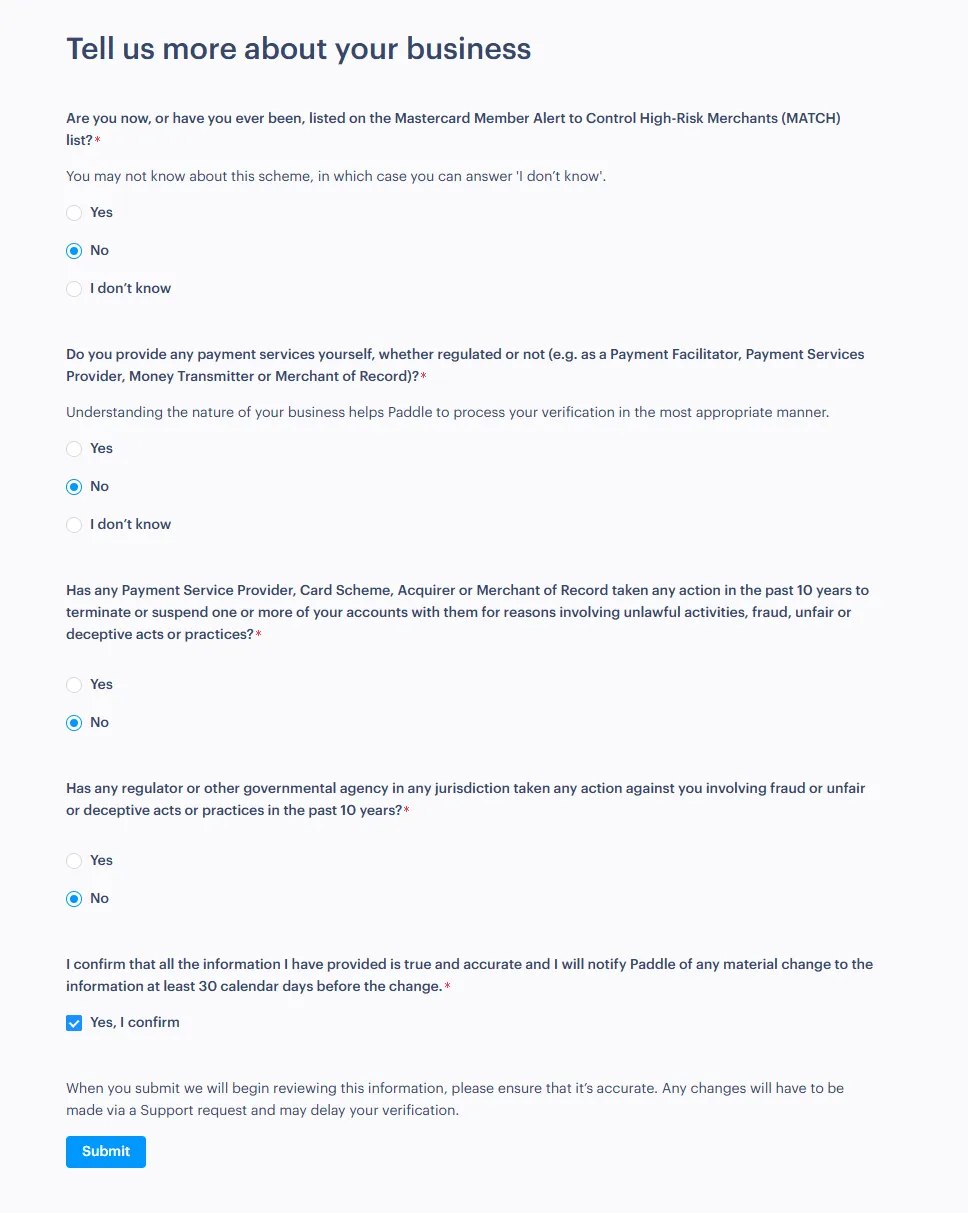 Paddle’s verification form. If you’ve been banned on Stripe or PayPal, you have to be very careful how you answer these.
You have to be extremely careful here. If you tell them you’ve been banned elsewhere or that you’re on a blacklist, your chances of getting in drop to near zero. Once you hit submit, you’re locked into those answers, and any changes have to go through support which usually ends the conversation right there.
Paddle requires a bit more coding skill for a custom website integration because they don’t give you a pretty storefront like Shoppy or Sellix. You have to integrate it into your own site, though there are packages like Laravel Cashier that make it easier. They also offer a hosted checkout, but you might have to unlock it by getting some normal payments through your direct integration first.
The biggest hurdle is the manual review. They will look at your website. It is super important that you avoid using high risk words like hack, cheat, or bot on any page they can easily click. You can still have pages for SEO that use those words, but keep them orphaned or only linked in your sitemap so a human reviewer doesn’t see them immediately. Some guys go even further and host a completely legit version of their site on a subdomain. They submit the “clean” site to the payment provider while keeping the real store on their main domain. It is a pain in the ass because you have to maintain two versions of the same site and figure out the redirects, but it’s one of the best ways to pass a manual check. You also need a legit-looking Terms of Service and Privacy Policy. Use AI to write those so they look professional. Once you pass that manual review, you are usually chilling. They just want to see that you look like a real software company and not a script kiddie setup.
Final Verdict
If you want the simplest, low-effort solution, go with a wrapper like antistock.io or shoppy.gg using PayPal Friends and Family. This is the preferred quick setup because you often don’t even need an ID, you just connect your account and start selling. It looks less professional, which is why it is the classic vibe coder choice, but it helps avoid the refund headache from the start. Stripe should be your absolute last resort, and honestly, I still don’t recommend it.
But if you want a long-term business that won’t disappear overnight, use a Merchant of Record. It is more reliable than any wrapper because they handle the legal and payment headaches for you. I recommend Paddle, but Lemon Squeezy is a good alternative if Stripe hasn’t nuked your identity yet. I’ve spent more energy fighting with Stripe support than I ever did coding, and most of the time it just ends in lost funds and bad moods. It is just not worth it.
Let an MoR handle the refunds and chargebacks, use F&F for PayPal whenever possible, and keep a crypto gateway ready as a backup. I personally always have crypto payment providers as a safety net. There is nothing worse than waking up to a $0 balance and a banned account right when your project is finally starting to make real money.
If you know a friend who’s still trying to sell digital products without a proper setup, send them this guide before they get blacklisted for life.
If you have questions or want to see how we handle our setups, come hang out in the Discord: https://discord.gg/3AMhvXa3Ss.